
Best Spring Skiing Resorts in North America for 2026/27
Spring is the most underrated time of the ski season.
Lift tickets drop. Crowds thin out. The sun is high enough that you can ski in a light jacket, and the base depth is at its deepest point of the entire winter. For skiers who care more about enjoying themselves than chasing deep powder, March and April are frequently better months than January.
The catch is that spring skiing is entirely dependent on picking the right mountain. A low-elevation, south-facing resort in a warm region can be slush by mid-morning and closed by late March. A high-elevation, north-facing resort with a deep snowpack can be delivering excellent conditions well into May. The gap between those two experiences is enormous, and it comes down almost entirely to elevation, aspect, and latitude.
The five resorts below were selected for their ability to hold quality snow late into the season, their typical closing dates, and the overall spring experience — because spring skiing is as much about sun decks, live music, and relaxed afternoons as it is about the snow itself.
Compare live snow conditions and costs →
1. Arapahoe Basin, Colorado

Arapahoe Basin is the definitive spring skiing destination in North America, and it has built its entire identity around that reputation. A-Basin routinely stays open into June and has occasionally run into early July — longer than any other resort in Colorado and among the longest seasons anywhere on the continent.
The reason is elevation. A-Basin’s base sits at 10,780 feet and the summit reaches 13,050 feet, making it one of the highest ski areas in North America. At that altitude, snow simply does not melt at the rate it does at resorts sitting 2,000 or 3,000 feet lower. The upper mountain terrain, including the East Wall and Montezuma Bowl, holds winter-quality snow long after lower resorts have turned to slush.
The Beach is the other half of the A-Basin spring story. The lower parking lot transforms into a tailgating scene from March onward, with skiers setting up grills, chairs, and speakers between laps. It is genuinely unlike anything else in North American skiing — unpretentious, social, and central to why people keep coming back late in the season. Arriving early to claim a Beach spot is a legitimate part of the planning.
A-Basin is a serious mountain rather than a resort in the full sense. There is no village, no slopeside hotel, and limited dining. Most visitors stay in Dillon, Silverthorne, or Keystone nearby and drive up. That lack of infrastructure keeps prices down and keeps the focus squarely on skiing, which suits the spring crowd well. Denver International Airport is roughly 90 minutes away.
- State: Colorado
- Nearest airport: Denver (DEN) — ~90 min
- Base elevation: 10,780 ft — among the highest in North America
- Typical closing: Late May to early June
- Pass compatibility: Ikon Pass
- Spring highlight: The Beach tailgating scene
- Routinely open into June — the longest season in Colorado
- Base elevation of 10,780 ft preserves snow long after lower resorts fail
- The Beach tailgating scene is unique in North American skiing
- No village keeps prices low and focus on the skiing
- 90 minutes from Denver with lodging in nearby Summit County towns
2. Mammoth Mountain, California

Mammoth is the best combination of late-season snow and reliable sunshine in North America. The Eastern Sierra receives enormous snowfall — averaging around 400 inches annually and considerably more in strong years — while also enjoying one of the sunniest climates of any major ski region. That pairing is what makes Mammoth’s spring season so consistently good.
The mountain’s summit reaches 11,053 feet, and the upper terrain holds snow remarkably well into late spring. Mammoth regularly operates into late May and in big snow years has run into July or even August. The 2022–23 season, following a historic Sierra snowpack, saw the mountain open continuously into August — an extraordinary demonstration of what the terrain can hold.
Spring at Mammoth means genuinely warm, sunny skiing. The corn snow cycle — where overnight freezing followed by daytime softening produces a forgiving, grippy surface — is close to ideal here, and skiers who understand the timing can get excellent conditions from mid-morning through early afternoon before things become too soft. The terrain parks also come into their own in spring, with softer landings making them more approachable.
Mammoth Lakes town sits at the base and offers a full range of accommodation, dining, and post-ski options. Mammoth Yosemite Airport (MMH) receives seasonal direct flights, and Reno-Tahoe (RNO) is roughly three hours by road. From Southern California, the drive up Highway 395 is around five to six hours, which is why the mountain draws so heavily from Los Angeles.
- State: California
- Nearest airport: Mammoth Yosemite (MMH) — ~15 min, or Reno (RNO) — ~3 hrs
- Summit elevation: 11,053 ft
- Typical closing: Late May, often later in big snow years
- Pass compatibility: Ikon Pass
- Spring highlight: Reliable sunshine and excellent corn snow cycles
- 400+ inches of snow combined with one of the sunniest ski climates in the US
- Has operated into July and August following exceptional snow years
- Excellent corn snow cycles from mid-morning through early afternoon
- Terrain parks at their best in spring with softer landings
- Mammoth Lakes town offers full accommodation and dining at the base
3. Whistler Blackcomb, British Columbia
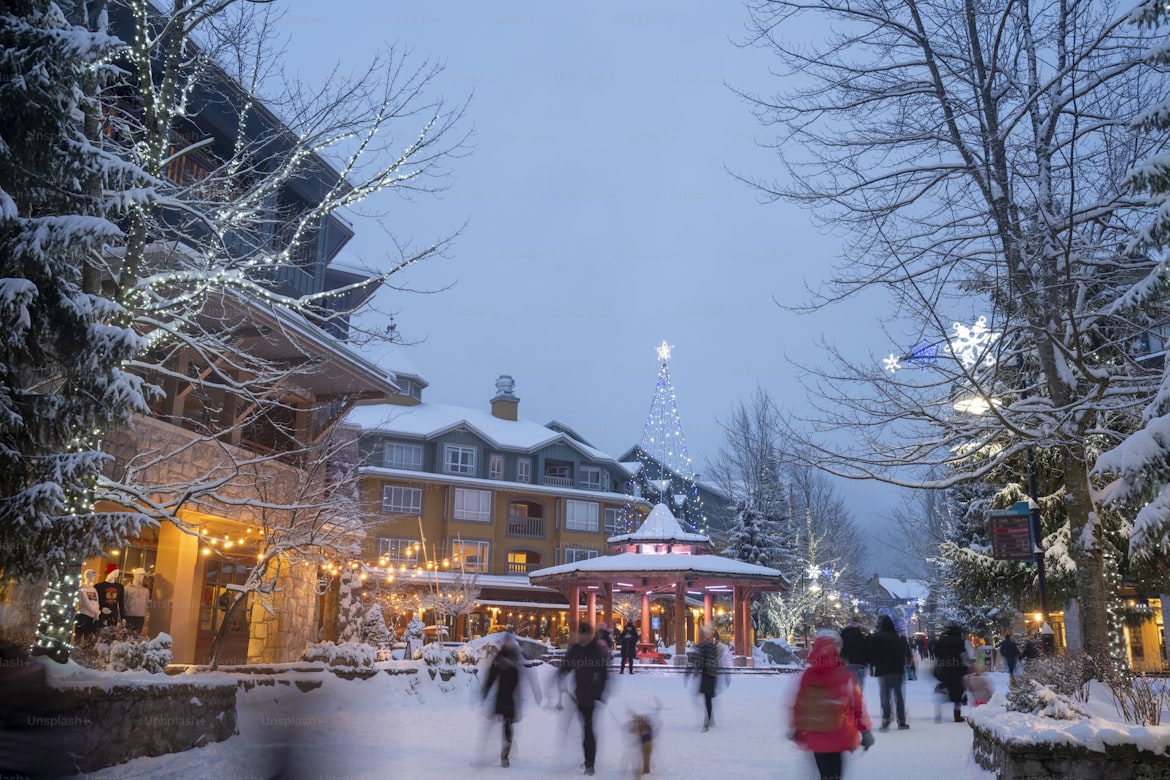
Whistler’s spring advantage is glacier skiing. The Horstman Glacier on Blackcomb Mountain allows the resort to extend its season considerably beyond what the natural snowpack alone would support, and Whistler typically operates into late May with glacier operations continuing further into summer in some years.
The mountain’s sheer vertical range is what makes spring work here. With over 5,000 feet of vertical, conditions at the top and bottom of the mountain can be entirely different on a spring day — winter snow up high, soft spring snow in the middle, and slush at the base. Experienced spring skiers simply stay high, lapping the alpine terrain where the snow holds, and only descend at the end of the day.
Spring is also when Whistler’s village comes into its own. The patios fill, the World Ski and Snowboard Festival brings live music and events in April, and the whole town takes on a considerably more relaxed atmosphere than the intense peak-season period. For visitors who want the full Whistler experience without February crowds and pricing, April is arguably the best month of the year to visit.
The other spring bonus is that the valley below is thawing while the mountain is still skiing. Mountain biking on the Whistler trails typically opens in May, and by late spring it is genuinely possible to ski in the morning and ride in the afternoon. Vancouver is roughly two hours south along the Sea-to-Sky Highway, which is far more pleasant to drive in spring than in midwinter.
- Province: British Columbia, Canada
- Nearest airport: Vancouver (YVR) — ~2 hrs
- Vertical drop: 5,280 ft
- Typical closing: Late May, with glacier operations later
- Pass compatibility: Epic Pass
- Spring highlight: World Ski and Snowboard Festival in April
- Horstman Glacier extends the season well beyond natural snowpack limits
- Over 5,000 ft of vertical means good snow high up even when the base is soft
- World Ski and Snowboard Festival brings live music and events each April
- Village patios and relaxed atmosphere at their best in spring
- Possible to ski in the morning and mountain bike in the afternoon by late spring
4. Snowbird, Utah

Snowbird combines the deepest snowpack in Utah with high elevation and predominantly north-facing terrain — a combination that makes it one of the most reliable late-season mountains in the United States. The resort averages over 500 inches annually, and Little Cottonwood Canyon’s cold, shaded aspect means that snow accumulates rather than degrading through the season.
Snowbird typically operates into late May and has run into July in exceptional years. The upper mountain, accessed by the Aerial Tram to Hidden Peak at 11,000 feet, holds genuine winter snow well into the spring months. Mineral Basin, on the back side of the mountain, catches sun in the afternoon and produces excellent corn skiing while the front side stays firmer for longer.
That front-back split is the key to skiing Snowbird well in spring. The strategy most experienced visitors use is to ski the shaded north-facing front side in the morning while it is still firm and fast, then move to sun-facing Mineral Basin in the afternoon as it softens into corn. Getting this timing right transforms a spring day at Snowbird from decent to genuinely excellent.
The practical advantages are strong. Salt Lake City International Airport is roughly 45 minutes away with no complicated mountain driving beyond the canyon road itself. Snowbird’s lift access is shared with neighbouring Alta on a combined ticket, effectively doubling the available terrain. Lodging is concentrated in the resort’s own properties at the base and in the Salt Lake valley below.
- State: Utah
- Nearest airport: Salt Lake City (SLC) — ~45 min
- Summit elevation: 11,000 ft (Hidden Peak)
- Typical closing: Late May, occasionally into July
- Pass compatibility: Ikon Pass
- Spring highlight: Front-side firm in the morning, Mineral Basin corn in the afternoon
- 500+ inches annually produces the deepest late-season base in Utah
- Aerial Tram accesses 11,000 ft terrain that holds winter snow into spring
- Front side and Mineral Basin offer different conditions at different times of day
- Combined ticket with Alta effectively doubles available terrain
- 45 minutes from Salt Lake City International Airport
5. Killington, Vermont

Killington is known as “The Beast of the East,” and a substantial part of that reputation rests on season length. It reliably opens earlier and closes later than any other resort in the eastern United States, frequently operating into late April or May while neighbouring Vermont mountains have long since closed.
The reason is snowmaking rather than natural snowfall. Killington operates one of the largest and most sophisticated snowmaking systems in North America, covering roughly 600 acres of terrain. That infrastructure builds an artificial base through the winter that is dense, deep, and far more resistant to spring melt than natural snow. Superstar, the resort’s signature spring run, holds a base measured in feet well into May.
Spring skiing at Killington is consequently concentrated rather than expansive. By late April, operations typically narrow to Superstar and a handful of adjacent trails served by the Superstar Express quad. It is not a full-mountain experience, but for eastern skiers who want to keep going into May without flying west, it is essentially the only option.
The spring atmosphere is a significant part of the appeal. The base area develops a festival feel, with barbecues, live music, and a crowd that is there specifically because skiing in a t-shirt in May is a novelty worth pursuing. Killington’s accessibility from the northeastern population centres is unmatched — roughly three hours from Boston and four and a half from New York City — making it a viable spring weekend trip without flying.
- State: Vermont
- Nearest airport: Burlington (BTV) — ~90 min, or Boston (BOS) — ~3 hrs
- Snowmaking coverage: ~600 acres, among the largest in North America
- Typical closing: Late April to May — longest season in the East
- Pass compatibility: Ikon Pass
- Spring highlight: Superstar holds a deep base into May
- Longest season of any resort in the eastern United States
- 600 acres of snowmaking builds a base that resists spring melt
- Superstar holds skiable depth well into May
- Festival atmosphere at the base with barbecues and live music
- Drivable spring weekend from Boston and New York without flying
See live snow data side by side →
How to Ski Spring Conditions Well
Spring snow behaves differently from midwinter snow, and skiing it well requires adjusting both technique and timing.
Understand the corn snow cycle
Corn snow forms when snow melts during the day and refreezes overnight, creating rounded granular crystals. The window when it is perfect is narrow — typically between about 9:30am and 1pm depending on aspect and temperature. Too early and the surface is still frozen and unforgiving. Too late and it is heavy, wet slush that grabs at your skis.
Follow the sun around the mountain
East-facing terrain softens first, south-facing next, and west-facing in the afternoon. North-facing terrain may never fully soften on a cold spring day. Planning your day to move around the mountain following this progression will give you good snow for far longer than staying in one area.
Elevation matters more than the calendar
A resort with a 10,000-foot base in April will have better snow than one with a 6,000-foot base in March. When comparing late-season options, base elevation is a more reliable predictor of conditions than the date.
Wax for warm snow
Warm-temperature wax makes a genuine difference in spring. Cold-weather wax on wet snow creates suction that slows you noticeably, particularly on flatter runs where you may struggle to maintain momentum. It is a small, cheap adjustment that meaningfully improves the day.
Dress in layers and use sunscreen
Spring days can start below freezing and reach shirt-sleeve warmth by noon. Layers you can shed matter. Sun exposure at altitude combined with reflection off snow is intense — sunburn in spring is far more common than in midwinter and catches people out repeatedly.
Watch for wet slides
Warming temperatures increase the risk of wet avalanches, particularly on steep sun-exposed slopes in the afternoon. In-bounds terrain is controlled, but if you venture into sidecountry or backcountry terrain in spring, check current avalanche forecasts and be off steep sun-affected slopes before they become unstable in the afternoon heat.
Final Thoughts
Spring skiing trades deep powder for sunshine, low prices, thin crowds, and a genuinely relaxed atmosphere. For a lot of skiers, that is a better trade than it sounds. The resorts above all have the elevation, aspect, or infrastructure to deliver real snow well after the season has ended elsewhere — which is what separates a great spring trip from a slushy disappointment.
Compare any two resorts side by side →