Golf Gear Shop – Choosara
Shop Smart for Your Golf Trip
Hand-picked gear to match your round — no fluff, no overwhelm.
Each section includes a short buying guide so you know what actually matters before you spend.
Affiliate disclosure: As an Amazon Associate, Choosara earns from qualifying purchases. If you buy through links on this page we may receive a small commission at no extra cost to you. This never affects which products we recommend.
⛳ Essential Golf Gear
What actually matters
Golf balls. The marketing around golf balls is more complicated than the reality. Balls are broadly split into two-piece distance balls and three or four-piece performance balls. Two-piece balls are firmer, travel further, spin less, and cost considerably less. Performance balls spin more around the greens and feel softer, but that control only becomes useful once you can consistently strike the ball properly.
If you are losing more than two or three balls a round, buy the cheapest two-piece balls you can find. There is no value in losing premium balls in the trees. Move up once your ball-striking is consistent.
Gloves. Worn on your lead hand — left hand for a right-handed golfer. Cabretta leather offers the best feel and grip but wears out faster and suffers in rain. Synthetic gloves last considerably longer and handle wet conditions better. Most golfers are better served by synthetic for regular play.
Rangefinders vs GPS. Laser rangefinders are more precise and give exact distance to the flag, but require a steady hand and clear line of sight. GPS devices and watches give you front, middle, and back of green distances instantly without aiming. For beginners, GPS is easier to use; for accuracy-focused players, laser wins.

Premium Golf Balls (Multi-Pack)
Consistent distance and feel for every skill level. Multi-packs are considerably better value than buying sleeves, particularly while you are still losing a few per round. GREAT reviews
View Deal

All-Weather Golf Glove
Reliable grip whether the course is dry or damp. Synthetic construction lasts significantly longer than cabretta leather and performs far better in rain. Great reviews
View Deal

Rangefinder / GPS Device, amazing price
Accurate yardages so every club choice is a confident one. Knowing your real distances is one of the fastest ways to lower scores — most amateurs consistently overestimate how far they hit each club.
View Deal
ADD IMAGE URL
⚠ PLACEHOLDER — add your affiliate link and image
Golf Tees (Bulk Pack)
Tees break constantly and disappear even faster. A bulk pack costs very little and means never borrowing from a playing partner. Mixed-length packs cover driver and iron tee shots.
View Deal
ADD IMAGE URL
⚠ PLACEHOLDER — add your affiliate link and image
Divot Tool & Ball Marker Set
Basic etiquette equipment that marks you as someone who knows what they are doing. Repairing your pitch marks on the green is expected, and a proper tool does it far better than a tee.
View Deal
ADD IMAGE URL
⚠ PLACEHOLDER — add your affiliate link and image
Microfibre Golf Towel
Clean grooves grip the ball and produce consistent spin. Dirt-packed grooves are a genuine cause of unpredictable shots. Look for a clip and a waffle-weave texture that actually lifts debris out.
View Deal
🏌️ Beginner-Friendly Picks
Do not buy expensive clubs first
Premium equipment does essentially nothing for a beginner. Until you have a repeatable swing, the difference between a budget set and a tour-level set is invisible in your scores. Spend the difference on lessons instead — a single lesson at the start is the highest-value hour in golf and prevents you building habits that take years to unlearn.
You do not need fourteen clubs. A driver, a hybrid or fairway wood, a few irons, a wedge, and a putter will get you round perfectly well. Fewer clubs also means fewer decisions, which speeds up play and reduces overthinking.
On shaft flex: most beginners and moderate-swing-speed players are better suited to regular flex than stiff. Stiff shafts require speed to load properly; if you do not have it, the ball goes lower and shorter. Buying stiff because it sounds better is a common and costly mistake.
Golf shoes are not essential for a first round — clean flat-soled trainers are acceptable at most public courses. Once you play regularly, spikeless golf shoes are the versatile choice: enough traction for the course, comfortable enough to walk in, and acceptable in the clubhouse.

Complete Beginner Club Set
Everything needed to start playing, matched and forgiving. Buying a package set is considerably cheaper than assembling clubs individually and removes the guesswork entirely.
Men’s / Women’s Set
Junior Set
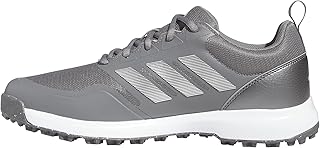
Comfort-Fit Golf Shoes
Stable and comfortable for a full round of walking. Eighteen holes covers roughly five miles on foot — comfort matters far more than most first-time buyers expect.
Men
Women
ADD IMAGE URL
⚠ PLACEHOLDER — add your affiliate link and image
Alignment Sticks
The cheapest genuinely useful training aid in golf. Most amateur miss-hits come from poor alignment rather than a bad swing. Laying sticks down on the range shows you immediately where you are actually aiming versus where you think you are.
View Deal
ADD IMAGE URL
⚠ PLACEHOLDER — add your affiliate link and image
Practice Net & Hitting Mat
Range fees add up quickly. A net and mat in a garage or garden lets you practise regularly, and regular short practice beats occasional long sessions for building a repeatable swing.
View Deal
☀️ Course-Day Must-Haves
Dress codes and sun exposure
Most courses still enforce a dress code, and public courses are generally more relaxed than private clubs. The reliable baseline is a collared polo shirt, chinos or tailored shorts, and golf shoes or clean trainers. Denim jeans, t-shirts, and athletic shorts are the items most commonly refused. Every course publishes its dress code on its website — check if you are unsure.
Sun exposure is the most underestimated aspect of a golf day. A round takes four to five hours, almost entirely outdoors with minimal shade. UPF-rated clothing provides consistent protection that does not wear off, unlike sunscreen. For anyone playing regularly in a hot climate, a UPF polo is a genuinely worthwhile purchase.
Rain gear matters more than it seems. Golf continues in light rain, and a round abandoned because you got soaked in the first hour is an expensive waste of a green fee. Look specifically for golf-specific rain jackets — they are cut to allow a full shoulder turn, which standard rain jackets restrict badly.

UV Protection Golf Polo
Breathable sun protection for hot, exposed courses. UPF-rated fabric protects consistently across a five-hour round without needing reapplication.
View Deal

Packable Rain Jacket
Stay dry and keep playing if the weather turns. Golf-specific cut allows a full shoulder turn, which standard rain jackets restrict enough to affect your swing.
View Deal
ADD IMAGE URL
⚠ PLACEHOLDER — add your affiliate link and image
Golf Cap or Wide-Brim Hat
Shade for your face and eyes across a long round. A wide-brim protects ears and neck better than a standard cap, which is worth considering if you play frequently in strong sun.
View Deal
ADD IMAGE URL
⚠ PLACEHOLDER — add your affiliate link and image
Insulated Water Bottle
Dehydration degrades concentration and swing consistency noticeably over the back nine. Course drink carts are expensive and unpredictable. An insulated bottle that keeps water cold for a full round pays for itself quickly.
View Deal
ADD IMAGE URL
⚠ PLACEHOLDER — add your affiliate link and image
Golf Sunglasses
Standard sunglasses can distort depth perception when reading greens. Golf-specific lenses are tinted to enhance contrast between grass textures, which genuinely helps with reading break and tracking your ball flight.
View Deal
🧳 Travel & Convenience
Protecting clubs in transit
Airline baggage handling damages golf clubs regularly, and the most common casualty is a snapped driver head. Two things reduce that risk substantially:
- A support rod inside the bag that extends above your longest club and absorbs impact. Often sold separately and worth the small cost.
- Reversing your driver so the head sits at the bottom of the bag rather than the top, where it is most exposed.
Hard case vs soft bag: hard cases offer the best protection but are heavy, expensive, and awkward to store at home. Padded soft bags with wheels are the practical compromise for most golfers — enough protection for typical handling, far easier to move and store.
Check your airline’s golf bag policy before flying. Some carriers treat golf bags as standard checked luggage at no additional cost, others apply oversize fees each way that can exceed the value of the bag over a few trips.

Golf Travel Case
Protect your clubs on flights and road trips. Add a support rod and reverse your driver head before travelling — two small steps that prevent the most common transit damage.
Best Option
Budget Option

Stand / Cart Bag
Lightweight and easy to carry or push for 18 holes. Stand bags suit walkers; cart bags have more storage but are heavier and designed to sit on a trolley or buggy.
Best Option
Budget Option
ADD IMAGE URL
⚠ PLACEHOLDER — add your affiliate link and image
Travel Support Rod
A cheap telescoping rod that extends above your longest club inside a travel bag and takes the impact that would otherwise snap a driver head. The single most cost-effective piece of protection for flying with clubs.
View Deal
ADD IMAGE URL
⚠ PLACEHOLDER — add your affiliate link and image
Golf Shoe Bag
Keeps muddy spikes away from clothing in your luggage, and lets shoes air out rather than sitting damp in a sealed case. A small item that prevents a genuinely annoying problem.
View Deal
💡 What to Buy First: A Priority Order
If you are building a setup from scratch
- 1. Lessons. Not equipment. One or two lessons before you buy anything will teach you more than any purchase, and will tell you what you actually need.
- 2. A glove and cheap balls. Enough to start on the range without committing to anything.
- 3. A package club set. Budget or used is entirely fine. Do not buy premium clubs before you have a repeatable swing.
- 4. Golf shoes. Once you are playing full rounds regularly and walking five miles a time.
- 5. A rangefinder or GPS. Once you are consistent enough that knowing exact distances actually changes your club selection.
- 6. Premium balls. Only once you stop losing several per round. There is no benefit to losing expensive balls.
The pattern behind most wasted golf spending is buying equipment to solve problems that technique solves better. Clubs do not fix a slice. Lessons do.